The Human Intelligence Imperative: Preparing STEM Learners for an AI-Driven Future
As AI takes over routine computational tasks, the role of human intelligence in STEM becomes more crucial than ever. Education must prioritize the uniquely human capabilities that complement and enhance work with AI systems.
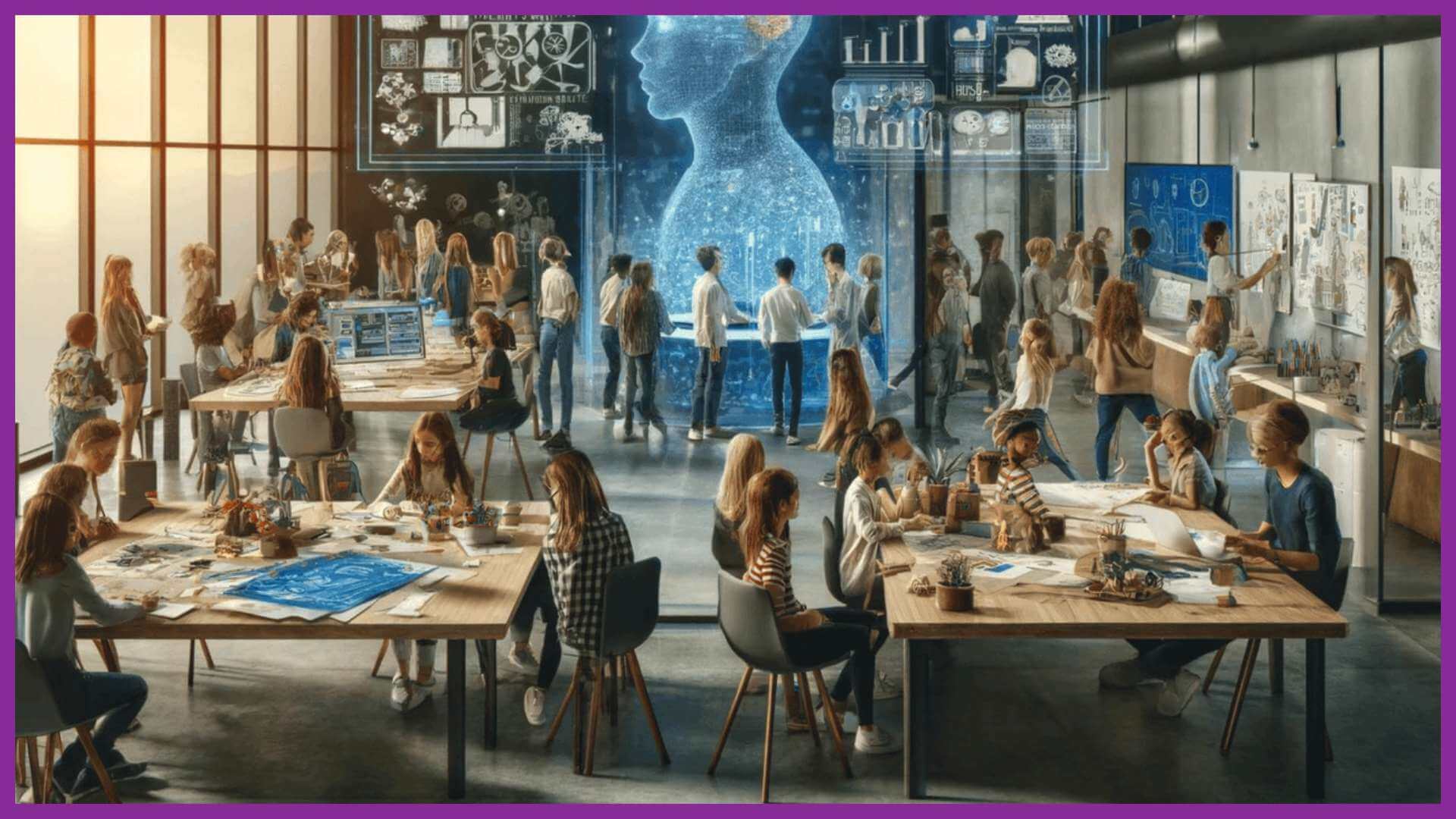
The rapid advancement of artificial intelligence (AI) is transforming the landscape of science, technology, engineering, and mathematics (STEM) fields. As AI takes over routine computational tasks and data analysis, the role of human intelligence becomes more crucial than ever. To thrive in this new era, STEM education will need to prioritize the development of uniquely human capabilities that complement and enhance work and collaboration with AI systems.
The Changing Nature of STEM Work
As automation and AI reshape the workforce, the skills required for success in STEM careers are evolving. While technical knowledge remains essential, the ability to think critically, solve complex problems creatively, and reason logically will set humans apart from machines. STEM professionals who can ask the right questions, interpret data insightfully in relation to their human contexts, and apply quantitative reasoning to real-world challenges will be in high demand.
In their report, "Generative AI and the future of work in America," the McKinsey Global Institute underscores the urgency of this transformation. The report projects that up to 12 million U.S. workers may need to transition to new occupations by 2030, largely driven by the accelerating pace of automation and the advent of generative AI. This rapidly evolving landscape demands a new approach to STEM education that prioritizes the development of uniquely human skills and capabilities.
Cultivating Human Intelligence in STEM Education
To prepare learners for the AI-driven future of STEM, education must prioritize the holistic development of key Human Intelligence competencies:
Adaptability in an AI-Driven World — Learners must be able to navigate uncertainty with agility, embrace change, and thrive in the face of new challenges and opportunities posed by AI-driven innovation.
Collaboration in Human-AI Teams — STEM professionals must be able to work effectively in teams that include both human and AI collaborators, with empathetic relationship-building, emotional intelligence, and effective communication.
Design Thinking for Human-Centered AI — Learners must be equipped to create technologies that prioritize human needs, with the ability to empathize with users, iterate on ideas, and develop AI systems that are ethical, transparent, and beneficial to society.
Human-Machine Problem-Solving — Education should empower learners to leverage AI's computational power while applying human creativity and judgment to tackle complex, ever-evolving issues at the frontiers of STEM.
Contextual Reasoning in Complex AI Environments — Learners must develop the ability to navigate complex STEM challenges with nuanced insights, interpreting AI outputs and guiding their application to multifaceted problems.
Creative Thinking in Tandem with AI — STEM education should inspire learners to think innovatively, generating original ideas and novel approaches that leverage the power of AI and drive groundbreaking discoveries.
The future of STEM education must place human intelligence at the center. By embracing this vision and working together to reimagine STEM learning, we can empower a new generation of professionals who are not only technically proficient but also possess the creativity, critical thinking, adaptability, and empathy necessary to harness the power of AI for the betterment of society.
Originally published by the Human Intelligence Movement.