What I Wish You Understood About Math Before Kindergarten
Prevention doesn't start in school — it starts at home. A spoken word reflection on the early math foundations that shape children's relationship with numbers, patterns, and problem-solving for life.
I just returned from the AI Show at ASU GSV, and I'm still processing what I saw — or rather, what I didn't see. Booth after booth, presentation after presentation showcased interventions for struggling math students. Software to help middle schoolers catch up. Programs to remediate high schoolers. Tools to identify which third graders are falling behind.
I saw endless tools designed to treat mathematical struggles, but almost nothing to promote mathematical wellness from the start.
When I asked my colleagues there about prevention — about building strong mathematical foundations before problems begin — I was met with blank stares or quick pivots back to their intervention products. The focus remains stubbornly fixed on treating symptoms rather than preventing the illness.
And here's what keeps me up at night: prevention doesn't start in school. It starts at home, with families. The same families who receive almost no guidance about how to support early mathematical thinking. The same families who are raising the 60% of children who don't attend any formal schooling before kindergarten.
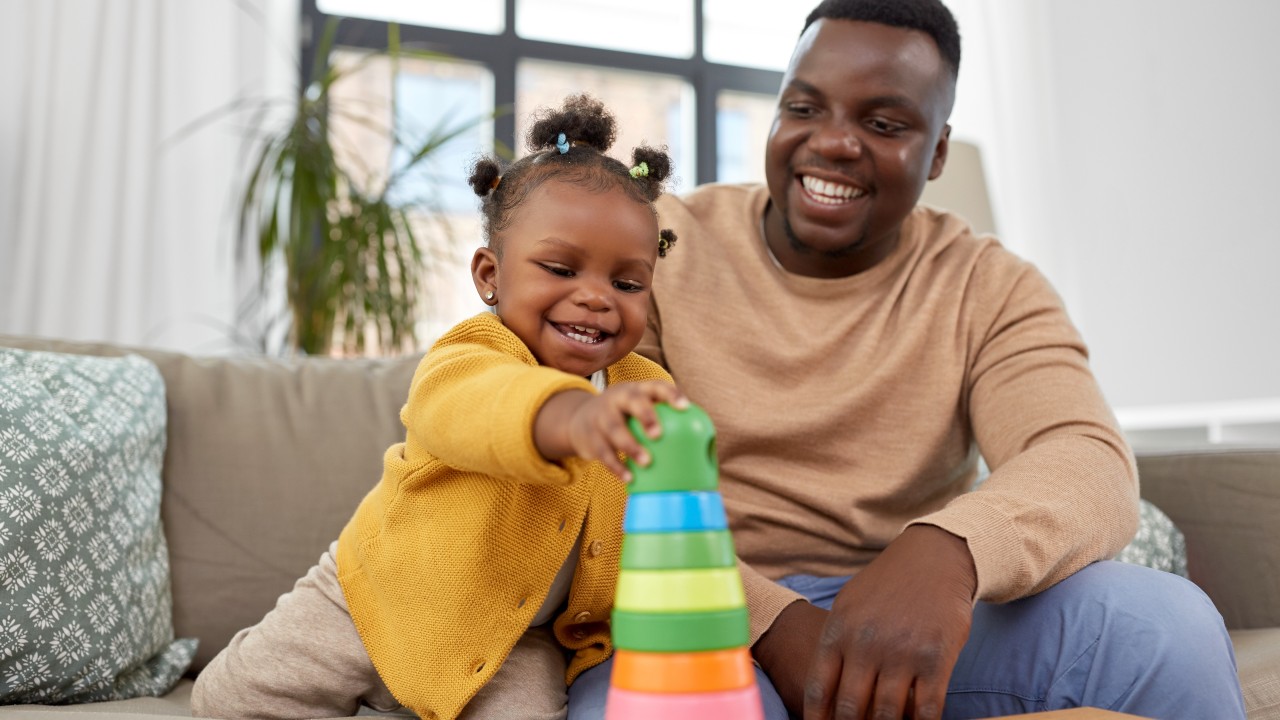
Parents are their children's very first math teachers — whether they accept this role or not. They can teach by commission or by omission, but they cannot avoid this role. Every interaction, every comment, every attitude expressed about mathematics shapes their child's developing relationship with numbers, patterns, and problem-solving.
Here's What I Wish You Knew About Math Before Kindergarten
[In the style of Spoken Word Poetry...]
On the predictive power of early math:
- I wish you knew that early math understanding predicts later math achievement more strongly than any other factor we can measure.
- I wish you knew that early math competency is a stronger predictor of later reading achievement than even early reading mastery itself.
- I wish you knew that the math your child masters in kindergarten sets a course that leads through graduation, college, higher-paying careers, better health, and greater lifetime earnings.
On mathematical thinking beyond numbers:
- I wish you knew that math learning begins from the day your baby is born, in the patterns of eating, sleeping, and daily routines.
- I wish you knew that mathematics isn't just counting — it's noticing relationships, recognizing patterns, making comparisons, and thinking logically.
- I wish you knew that spatial skills — building with blocks, fitting shapes together, creating with hands — form the foundation for geometric thinking and problem-solving.
On parents as their child's first math teachers:
- I wish you knew that YOU are your child's first math teacher, whether you accept that role or not — and if you don't accept it, you'll still teach them about math, just not in the way you'd want.
- I wish you knew that regular shared math activity between you and your child will make them ready for kindergarten math learning in ways worksheets and flashcards never will.
- I wish you knew that you need to use MANY more math words with your child (e.g., more, less, same, different, how many, pattern, compare) — you're using way too few.
- I wish you knew that children who hear math language at home enter school with an advantage that grows with each passing year.
On everyday opportunities:
- I wish you knew that math isn't something you do for twenty minutes with a workbook; it's a way of seeing and making sense of the world.
- I wish you knew that cooking together teaches measurement, fractions, and proportional reasoning without a single worksheet.
- I wish you knew that board games and card games (like "Go Fish" and "War") develop more mathematical thinking and fluency than most activities labeled as "educational."
- I wish you knew that your questions matter more than your answers — asking "How do you know?" or "What might happen if...?" or "How can we find out?" nurtures and deepens mathematical thinking.
On the limitations of institutional support:
- I wish you knew that most PreK teachers have minimal training in teaching math — many have none at all.
- I wish you knew that many early childhood educators experience math anxiety themselves, leading them to spend as little as 15–20 minutes per day on mathematical activities, far less than the time devoted to literacy.
- I wish you knew that most PreK teachers struggle to accurately identify what your child knows about math — they both over and underestimate children's skills.
On misconceptions and commercial misrepresentations:
- I wish you knew that the toy industry sells "math learning toys" based on what looks like math to you, not what actually builds mathematical thinking in your child.
- I wish you knew that most early math apps are filled with flashy animations and rote activities, not the thoughtful exploration that builds true mathematical understanding.
- I wish you knew that memorizing doesn't equal understanding — and that understanding matters infinitely more for long-term success.
- I wish you knew that there's no such thing as a "math person" — just people who've had different experiences and messaging around mathematics.
On children's identity formation:
- I wish you knew that when children feel confident in math, they see themselves as "smart" in ways that lift every subject they study.
- I wish you knew that when you say "I'm not a math person," you're giving your child permission to give up on mathematics before they've even begun.
- I wish you knew that your math anxiety and negative self-talk about mathematics can be passed to your child, shaping their relationship with numbers long before their first math class.
A Plea to Parents
I see you — tired, overwhelmed, and trying your best. Between diaper changes and meal prep, work demands and sleepless nights, the last thing you need is one more responsibility on your shoulders.
But I must share something too important to leave unsaid.
In these earliest years, your child's mathematical mind is awakening. Not just in the moments you count their fingers and toes or sing "Five Little Monkeys," but in every pattern you create, every comparison you make, every puzzle you solve together.
It's not about buying special materials or setting aside "math time" — far from it in fact. Instead, it's about noticing the math already woven into your daily life — and sharing it with your child. Your child is forming their relationship with mathematics right now, through your eyes, your words, your attitudes. They're deciding if math belongs in their world — if it's something approachable or something to fear.
The foundation you're building now, often without realizing it, will support everything that comes later. And unlike many parenting challenges, this one doesn't require extra time — just a shift in awareness about the mathematical moments already filling your days.
Your child's first and most important math teacher isn't waiting in a Pre-K or Kindergarten classroom. That teacher is you, reading this article, right now. And I promise, you're already more qualified than you know.
Beyond the Home: Our Shared Responsibility
To the rest of us reading this article — this is about our collective future.
When children start kindergarten without strong mathematical foundations, we all pay the price. Businesses struggle to find employees with the quantitative reasoning skills they need. Scientific advancement slows without minds trained to recognize patterns and solve problems.
The readiness gap that begins before kindergarten ripples through our entire society. For too long, we've approached this challenge backward — pouring resources into remediation rather than prevention, treating symptoms rather than causes.
This challenge has compelled me to move beyond writing and research. Together with colleagues, we've begun developing PAL (Personal Assistant for Learning), a tool designed to support parents in creating rich mathematical environments for their young children at home, while simultaneously developing and deepening early childhood teachers' math content and pedagogical knowledge. This work has only reaffirmed my conviction that prevention, not intervention, must be our priority.
Our children's mathematical futures are too important to leave to chance or to postpone until formal schooling begins. Our society's future depends on the mathematical foundations we build today. The time to act is now, and the place to start is home.
Originally published on LinkedIn